Blog

Hearing Impairment Does Not Per Se Preclude Individual As A Juror: Trial Court Has Discretion And If Possible Reasonable Accommodation Should Be Made

By Stephen N. Preziosi, December 21st, 2011

People v. Guay 2011 NY Slip Op 08178

Decided November 15, 2011 New York Court of Appeals.   

Issue: Whether Supreme Court abused its discretion when it dismissed a hearing-impaired prospective juror for cause.

Holding: We hold that it did not. Trial courts have discretion to determine whether an auditory problem will unduly interfere with an individual’s ability to fulfill the important functions that trial jurors perform. This determination, “[a]s with most juror qualification questions,” must “be left largely to the discretion of the trial court, which can question and observe the prospective juror . . . during the voir dire”.

Facts: Defendant was indicted for first-degree rape, first-degree sexual abuse and endangering the welfare of a child. During jury selection, after groups of venire members were placed in the jury box for individual questioning, the trial court read introductory instructions to these prospective jurors and inquired if anyone had difficulty hearing. Venire member 1405 responded affirmatively.

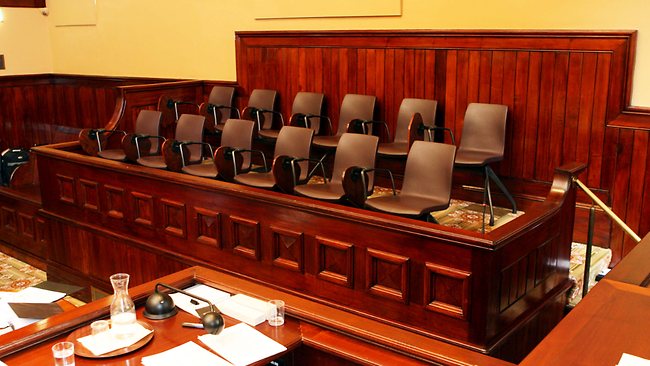
Defense counsel apparently realized that venire member 1405 was having trouble comprehending the questions and asked him if he had “any problems hearing as  He replied “[o]nce in a while you talk awfully low.” Defense counsel remarked, “I have to be reminded to speak up. But you could sit on a jury throughout the course of the week? You don’t think you would have any hearing problems as long as I speak up?” The prospective juror responded “I’m pretty good right here in the front” row of the jury box.

At the conclusion of this round of voir dire, the People moved to dismiss venire member 1405 for cause. The prosecutor noted that the panelist “had trouble hearing the [c]ourt” and that child victims frequently “have trouble speaking up” when they testify, which raised a concern that venire member 1405 could “miss critical parts of [Jane's] testimony.” Defense counsel opposed the request, Although Supreme Court agreed with defense counsel’s characterization of venire member 1405′s statements, the judge further explained  I think that the People make a valid point that children tend to be more soft spoken witnesses, and adults, all things considered, I think his hearing is a big enough problem []here that it does disqualify him from serving as a juror.”

The court therefore granted the People’s challenge for cause. The jury convicted defendant on all counts. He was sentenced to an aggregate prison term of 20 years and 10 years of postrelease supervision.

Legal Analysis: Defendant contends that the trial court erred because it allegedly failed to engage in an adequate inquiry regarding venire member 1405′s ability to serve on the jury and, rather than dismissing him for cause, the court should have accommodated his hearing impairment.

New York has long considered jury service to be a civil right that is a privilege and duty of citizenship protected by the State Constitution. A person’s ability to serve as a juror, however, must be balanced against the accused’s fundamental constitutional rights and the State’s obligation to provide a fair trial. Among other requirements specified in Judiciary Law § 510, “[i]n order to qualify as a juror a person must . . . [b]e able to understand and communicate in the English language” (Judiciary Law § 510 [4]). 

When confronted with such a situation involving a prospective juror’s hearing impairment, a court must determine whether the individual has the ability to “understand all of the evidence presented, evaluate that evidence in a rational manner, communicate effectively with the other jurors during deliberations, and comprehend the applicable legal principles, as instructed by the court” (People v Guzman, 76 NY2d at 5).

If a judge is made aware of a reasonable accommodation that would allow a hearing-impaired prospective juror to fulfill these duties without interfering with the defendant’s trial rights, such measures should be taken.

A hearing impairment does not per se preclude an individual from serving as a juror. Trial courts have discretion to determine whether an auditory problem will unduly interfere with an individual’s ability to fulfill the important functions that trial jurors perform. This determination, “[a]s with most juror qualification questions,” must “be left largely to the discretion of the trial court, which can question and observe the prospective juror . . . during the voir dire”.

Although the Appellate Division possesses the power to exercise its own discretion and substitute its judgment for that of the trial court, this Court lacks that authority. When the Appellate Division adopts a trial court’s factual findings and the application of those facts to the applicable legal principles, as occurred here, that determination presents a mixed question of law and fact that we cannot overturn unless there is no record support for the trial court’s conclusion.

In this case, we hold that Supreme Court did not abuse its discretion by granting the cause challenge to venire member 1405 because the record supported the determination that his hearing impairment would have unduly interfered with his ability to be a trial juror. It was readily apparent to the court and the parties that this panelist had trouble hearing the precise questions posed.

It is also significant that, aside from the panelist’s own suggestion that he remain in the front row, the court was not asked to offer any other reasonable accommodation that may have adequately assuaged the concerns about the prospective juror’s ability to understand the proceedings and fulfill the functions of a trial juror.

The record also does not reveal whether any type of audio equipment for the hearing impaired was available in the courthouse or whether venire member 1405 would have been willing to use such a device. Therefore, this case is not akin to Guzman, where the prospective juror confirmed that a sign language interpreter would allow him to follow the proceedings verbatim. In the absence of some suggestion for reasonably addressing the concerns about venire member 1405, we cannot fault the trial court for failing to order an accommodation sua sponte.

It is imperative that the privilege and duty of jury service be made available to all eligible individuals — regardless of disability — who are capable of performing this civic function. For this reason, a judge should endeavor to make a reasonable and tactful inquiry of any prospective juror who appears to have a hearing impairment and consider offering to provide an assistive amplification device or some other appropriate accommodation available in our court system.

If there are questions about this blog or about the law on this topic please visit our contact page. 

Court Must Advise Of Post Release Supervision Or Reversal Is Warranted

By Stephen N. Preziosi, December 20th, 2011

People v. McAlpin  2011 Slip Op 08456

Decided November 22, 2011 New York Court of Appeals 

Issue: Whether the trial court’s failure to mention the potential imposition of post-release supervision at sentencing required reversal and vacatur of the plea.

Holding: Where the trial court only referenced the prison term and omitted any mention of the possibility of post-release supervision, this gave the defendant an inaccurate impression concerning the court’s sentencing options and reversal and vacatur of the plea was appropriate.

Facts: Defendant pleaded guilty to robbery in the second degree with the understanding that he would be adjudicated a youthful offender and receive a term of probation if he satisfied specified conditions.

At the plea proceeding, Supreme Court further advised defendant that, if he violated the terms of the youthful offender agreement, the sentencing agreement would be vacated and the court could impose a prison sentence of at least three and one-half years, with a potential maximum sentence of fifteen years.

Defendant violated several terms of the youthful offender agreement and, at the subsequent sentencing proceeding, the court imposed a determinate prison sentence of three and one-half years plus five years of post-release supervision.

Legal Analysis: On appeal, defendant contended that reversal was required under People v Catu (4 NY3d 242 [2005]) because,  the court failed to reference the potential imposition of post-release supervision.  Having elected to advise defendant of the consequences that might flow from the violation of the youthful offender agreement, the court referenced only a prison term, omitting any mention of the possibility of post-release supervision, thereby giving defendant an inaccurate impression concerning the court’s sentencing options.

Accordingly, we conclude that reversal and vacatur of the plea was appropriate. Here, in contrast, the court first mentioned post-release supervision only moments before imposing the sentence. We are also unconvinced that the court’s brief remark at sentencing to the effect that it had previously advised defendant that he would receive a sentence of three and one-half years and five years post-release supervision if he violated the agreement, which defense counsel acknowledged, conclusively established that the court had advised defendant of the potential post-release supervision sentence prior to accepting the plea.

The Molineux Rule And The Scope Of Expert Witness Testimony

By Stephen N. Preziosi, December 12th, 2011

People v. Rivers 2011 NY Slip Op 08455 

Decided November 22, 2011 New York Court of Appeals 

Issue(s):

1) Whether repeated violations of the trial court’s Molineux ruling was so prejudicial that it warranted a new trial;

2) Whether the scope of the expert testimony that ruled out accidental and natural causes of the fires and concluded that the fire was set intentionally invaded the jury’s province

Holding:

1) The evidence that was improperly admitted in violation of the court’s Molineux ruling was subject to harmless error analysis and because there was overwhelming proof of guilt there was no reasonable possibility or significant probability that the improper questions and elicited references to defendant’s bad acts and negative associations affected the jury’s verdict.

2) The admission of the expert’s testimony was also subject to harmless error analysis and the Court of Appeals held that the guiding principle to admitting expert opinion is that it is properly admitted when it would help clarify an issue calling for professional or technical knowledge, possessed by the expert and beyond the ken of the typical juror and this principle applies to testimony regarding both the ultimate questions and those of lesser significance.  The testimony was admissible because there was additional evidence adduced at trial that demonstrated that the fires were set intentionally.

Facts: Defendant was charged with numerous offenses, including three counts of arson in the first degree in connection with two fires set five days apart in a four-story apartment building located at 408 Greene Avenue in Brooklyn, New York.

On appeal, defendant argued that the prosecutor repeatedly violated the trial court’s Molineux rulings by eliciting evidence of an uncharged arson attempt and of his prior bad acts and associations — the elicited testimony linked defendant to violence, guns, the Nation of Islam, and a violent motor cycle gang.

During the course of the trial testimony was elicited from an expert witness that ruled out accidental and natural causes of the fires and concluded that one of the fires was intentionally set.  The defendant argued on appeal that this invaded the province of the jury and was improperly admitted.

Legal Analysis: To the extent any evidence subject to the trial court’s Molineux rulings was improperly admitted, such error was harmless.  The evidence against defendant, from his own taped admissions, and testimony of the individual who set the first fire at defendant’s behest, overwhelmingly established defendant’s guilt of the crimes charged.

Further, there was no reasonable possibility or significant probability that the improper questions and elicited references to defendant’s bad acts and negative associations affected the jury’s verdict, or that the absence of such errors would have led to an acquittal.

New York has a well-established body of case law concerning the admissibility and limits of expert testimony, that should be brought to bear in deciding what an arson expert may tell the jury in a particular case. “The guiding principle is that expert opinion is proper when it would help to clarify an issue calling for professional or technical knowledge, possessed by the expert and beyond the ken of the typical juror”  Moreover, this principle applies to testimony regarding both “the ultimate questions and those of lesser significance”

Although, in deciding whether expert testimony is admissible, courts must determine whether “the potential value of the evidence is outweighed by the possibility of undue prejudice to the defendant or interference with the province of the jury”.

“Courts should be wary not to exclude such testimony merely because, to some degree, it invades the jury’s province”. “Expert opinion testimony is used in partial substitution for the jury’s otherwise exclusive province which is to draw ‘conclusions from the facts.’ It is a kind of authorized encroachment in that respect”   Obviously, expert testimony would not generally be admissible in a case where the fire’s cause is not in question.

Here, because the evidence adduced at trial conclusively established, apart from the expert testimony, that the subject fires were intentionally set, it can be argued that the admission of expert testimony was largely unnecessary. In any event, any error was harmless, because the evidence of defendant’s guilt was overwhelming and there was no significant probability that the jury would have acquitted defendant without the expert testimony.

Due Process/Harmless Error: Shackles On The Defendant At Trial.

By Stephen N. Preziosi, December 7th, 2011

People v. Clyde 2011 NY Slip Op 08453

Decided November 22, 2011 New York Court of Appeals 

Issue: whether the presence of shackles on the defendant during trial violated his constitutional rights and whether it so prejudiced the defendant that it required a new trial.

Holding: Harmless error analysis is applicable in the due process analysis when a trial court has ordered the use of visible shackles without adequate justification articulated on the record . Here, defendant’s shackling during trial was harmless.

Facts:  A female corrections office at Auburn Correctional Facility was attacked by one of the prisoners.  During the attack she was unable to see her attacker.  A civilian employee of the prison saw the attack and tried to stop the inmate.  The inmate ran out of the building.

Corrections Officer John Exner found defendant Raymond Clyde in the yard. He was sweating profusely, was acting nervously, and gave an explanation for his presence in the yard that made no sense to the officer. Rebich identified Clyde as the man he had encountered in the corridor.

Clyde’s DNA was found on a sock, a towel, and a glove, left behind when the attacker fled the corridor. The DNA samples on the towel and glove came from semen. Semen was also found on the female victim’s T-shirt, but was insufficient for identification purposes.

The female employee had numerous facial lacerations, She told the nurse who treated her at the prison infirmary that an inmate had tried to rape her. Clyde was indicted on charges of attempted rape in the first degree, assault in the second degree unlawful imprisonment Defense counsel sought an order from County Court directing that Clyde be permitted to appear in court without prison garb, chains or shackles.

The People,  produced a report of Clyde’s criminal history, showing that he was serving a prison sentence of 25 to 50 years, The People also pointed to Clyde’s earlier convictions and to a history of over 20 disciplinary findings during his present incarceration.

When Clyde’s trial began in December 2007, County Court agreed that Clyde could wear non-institutional clothes and need not wear handcuffs, but insisted that he wear leg irons. The trial court offered to have a “curtain” draped around the defense table to conceal the leg irons. After some discussion with Clyde about the practical difficulties of such an arrangement, which would not allow Clyde to attend side-bar conferences without revealing the leg irons, Clyde agreed to forego the curtain. At no point did County Court place on the record its findings showing that Clyde needed restraint by means of leg irons.

Clyde waived his right to counsel. Properly warned of the risks of self-representation, Clyde proceeded pro se throughout jury selection and his trial . Clyde did not raise the subject of his shackles again, and sought no cautionary instruction in that regard.

The jury found Clyde guilty on all counts. County Court granted Clyde’s motion with respect to the charge of attempted first-degree rape, dismissing that count of the indictment,

Clyde appealed, arguing that County Court had failed to articulate a reasonable basis on the record for its determination to restrain him in shackles during the trial. The People appealed County Court’s order dismissing the charge of attempted first-degree rape. The Appellate Division reversed County Court’s judgment of conviction, ruling that the use of shackles was reversible error, and further held that the trial court had properly dismissed the attempted rape charge.

Legal Analysis: In Deck v Missouri 544 U.S. 622 (2005) the United States Supreme Court, surveying  held that the Federal Constitution prohibits the use of physical restraints visible to the jury during a criminal trial, absent a court determination that they are “justified by an essential state interest . . . specific to the defendant on trial” Such essential state interests include “physical security, escape prevention, [and] courtroom decorum” The trial court must exercise “close judicial scrutiny”  in determining whether such an interest requires shackling.

The Deck Court enunciated three fundamental legal principles that underlie this well-grounded holding: the presumption of innocence, securing a meaningful defense, and maintaining dignified proceedings.  Visible shackles may not be used unless justified by an individualized security determination conducted by the trial court, which “must be case specific; it should reflect particular concerns, say, special security needs or escape risks, related to the defendant on trial” to avoid committing error, a trial court requiring a defendant to be visibly shackled should place its individualized findings on the record.

Finally, the Supreme Court clarified that “where a court, without adequate justification, orders the defendant to wear shackles that will be seen by the jury, the defendant need not demonstrate actual prejudice to make out a due process violation. The State must prove ‘beyond a reasonable doubt that the [shackling] error complained of did not contribute to the verdict obtained’”

Here, County Court did not place on the record its reasons for considering leg irons necessary during Clyde’s trial. We cannot tell from the record whether County Court shackled Clyde as a matter of routine because he had already been convicted of a violent crime, or whether the court engaged in case-specific reasoning that led to the conclusion that shackles were necessary. The use of leg irons was therefore a violation of Clyde’s constitutional rights under Deck.

The issue then becomes whether the trial court’s error was harmless. Because we find that the trial court committed error as a matter of Federal Constitutional law, we apply Supreme Court precedent in deciding w

Were we to decide this question under State Constitutional law, the result would be the same. A defendant has the right to be free of visible shackles, unless there has been a case-specific, on-the-record finding of necessity. However, we would not hold, as a matter of State law, that an error in ordering shackles requires automatic reversal.

A constitutional error is “considered harmless when, in light of the totality of the evidence, there is no reasonable possibility that the error affected the jury’s verdict”  We take into account “two discrete factors: (1) the quantum and nature of the evidence against defendant if the error is excised and (2) the causal effect the error may nevertheless have had on the jury”. We therefore must decide whether the proof of Clyde’s guilt was overwhelming and whether there is no reasonable possibility that the jury would have acquitted him were it not for the shackling error.

The evidence was overwhelming. In particular, DNA evidence and Rebich’s identification placed Clyde at the crime scene, we do not believe that there is a reasonable possibility that the jury would have acquitted Clyde had he not worn visible shackles at trial. A jury, faced with a defendant accused of assaulting and/or attempting to rape a civilian while incarcerated, is more likely to conclude that the defendant was shackled as a precaution, because of the nature of the crimes charged, than to conclude that the defendant was shackled because he was independently known to be dangerous.

Clyde also argues on appeal, testifying physicians were improperly allowed to testify as to their conclusions regarding the female victim’s and Rebich’s injuries, in the context of statutory interpretation,  because those conclusions were for the jury to draw.

Admissibility turns on whether, given the nature of the subject, the facts cannot be stated or described to the jury in such a manner as to enable them to form an accurate judgment thereon.  The facts that underlie physical injury and risk of serious physical injury can readily be stated to a jury so as to enable the jurors to form an accurate judgment concerning the elements of assault and unlawful imprisonment. It was therefore error to over-rule Clyde’s objections and permit this expert testimony.

Nonconstitutional harmless error analysis applies to this error. The evidence that  was overwhelming and there is no significant probability that the jury’s verdict on these counts would have been different had it been required to draw its own conclusions with regard to the extent of the two victims’s injuries. Consequently, the evidentiary error was harmless.

Can A Defendant Be Forced To Wear Shackles During A Trial?

By Stephen N. Preziosi, December 5th, 2011

People v. Cruz 2011 NY Slip Op 08454

Decided November 22, 2011 New York Court of Appeals 

Issue: whether the presence of leg shackles on the defendant during trial was a violation of his constitutional rights and so highly prejudicial that it warrants a new trial.

Holding: Reversed and a new trial ordered. Federal constitutional law “prohibits the use of physical restraints visible to the jury during a criminal trial, absent a court determination that they are justified by an essential state interest specific to the defendant on trial”.

Facts: Naomi Edwards encountered an intruder in the kitchen of her home in Brentwood, Suffolk County. The man appeared to her to be “Puerto Rican or . . . light skinned African American.” He pulled a baseball cap down over his face and ran out of her house.

Edwards’s neighbor, Raquel Oliveria, had seen a man on a light blue ten-speed bicycle riding slowly back and forth on the street, before entering Edwards’s driveway.  man parked his bicycle in the driveway,He attempted to open two windows at Edwards’s house.  A few minutes later, Oliveria saw the man as he fled the house.

Edwards and Oliveria called 911. Police Officer Charles Ross was dispatched to look for a Hispanic male, riding a blue bicycle, Within about three minutes, Ross saw a man fitting that description,  about a quarter of a mile from Edwards’s house. The man, defendant Geraldo Cruz, said he was on his way to a friend’s house.

Officer Petersen asked Oliveria to accompany him to view the suspect. At the “show-up,” Oliveria identified Cruz as the man she had seen trying to break in to her neighbor’s house. However, she did so, not by recognizing his face, but on the basis of the clothes he was wearing and the bicycle he was riding.

County Court held Wade and Sandoval hearings. At the latter, it emerged that Cruz had four felony and four misdemeanor convictions. The record contains no evidence that Cruz behaved disruptively during the hearings. 

At voir dire, defense counsel, finding Cruz in “leg shackles,” asked for the basis for restraining his client. County Court gave no immediate explanation, but noted that a curtain of opaque bunting had been placed around the defense table to conceal the restraints. The jury, County Court opined, would “never know anything about the shackles.” Defense counsel strenuously objected, around the defense table but not the prosecution table that Cruz was shackled.

Subsequently, County Court made the following remarks, regarding Cruz’s shackles:”[Cruz] is no stranger to the criminal justice system. He has been a threat before to society. Also, my concern is that it’s been explained to him should he not prevail on this matter he’s looking at a long, long time. . . . His motive to destroy the trial or to take vengeance upon anybody who testifies or just to disrupt the proceedings, based upon the potential for what he’s looking at might be an incentive.

County Court also stated that the incidence of “problems” in courtrooms had “risen dramatically over the last few years.” Finally, the judge mentioned that Cruz was not being “singled out,” adding that shackling had been his “policy . . . with numerous cases. The next day, County Court added”[S]o the record is clear, . . . the shackling . . . was not my independent determination. It was recommended to me by the security staff.” County Court then denied defense counsel’s request for a hearing on the matter.

The restraints were removed before Cruz was escorted by court officers to the witness stand to testify. Oliveria and Edwards testified at the trial. The jury heard testimony concerning Oliveria’s show-up identification of Cruz. Edwards identified Cruz’s hat and shirt as those the intruder had worn.  Cruz testified that the bicycle he was riding when arrested was not his own; seeing the bicycle lying abandoned on the street, he had taken it a few moments before the police stopped him.The jury found Cruz guilty of burglary in the second degree.  Cruz appealed, arguing, among other things, that the shackling violated his constitutional rights. The Appellate Division affirmed County Court’s judgment of conviction. A Judge of this Court granted Cruz leave to appeal, and we now reverse.

Legal Analysis: Federal constitutional law “prohibits the use of physical restraints visible to the jury during a criminal trial, absent a court determination that they are justified by an essential state interest specific to the defendant on trial”.

Trial courts may not shackle defendants routinely, but only if there is a particular reason to do so”. On the record before us, we cannot conclude that the shackles were not visible to the jury, or that the jury, seeing the bunting around the defense table and not the prosecutor’s, would not have inferred that it was there to hide shackles on Cruz’s legs.  County Court did not place on the record any findings, particular to Cruz, justifying the use of leg irons.  In its final statement on the matter, County Court conceded that it had not reached its own “independent determination” as to the necessity of shackles. Consequently, the use of leg irons was a violation of Cruz’s constitutional rights under Deck. Harmless error analysis is applicable to the People concede that the evidence against Cruz was not overwhelming, so that they cannot meet their burden of showing that any constitutional error was harmless beyond a reasonable doubt.

In Deck v. Missouri, 544 U.S. 622 (2005) the United States Supreme Court held that the Federal OCnstitution prohibits the use of phisycal restraints visible to the jury during a criminal tiral, absent a court determination that they are justified by an essential state interest specific to the defendant on trial  USc essential state interests include phisicla security, escape prevention and courtoom decorum.

The trial court must exercise close judicial scrutiny in determining whether such an interest requires shackling.  the court enunciated three fundamental legal principles that underlie this well grounded holding: the presumption of innocence, securing a meaningful defense, and maintaining dignified proceedings.  Visible shackles my not be used unless justified by an individualized security determination conducted by the trial court, which must be case specific and should reflect particular concerns or special security needs or escape risks, related to the defendant ton trial .  To avoid committing error, a trial court requiring a defendant to be visibly shackled should place its individualized findings on the record.